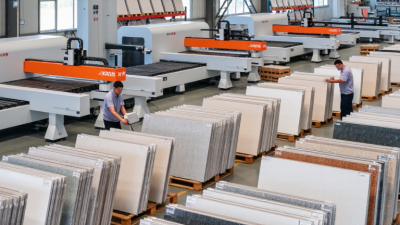
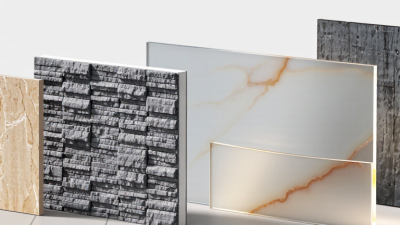
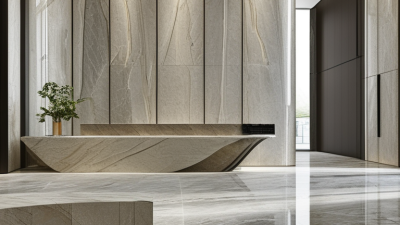
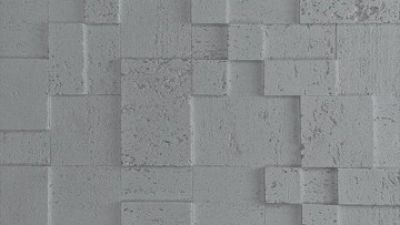
More and more, international buyers are taking a closer look at rammed earth panels as a greener, more eco-friendly option for walls, facades, and interior features. These panels aren't just about looks – they can add thermal mass, improve acoustic comfort, and even give a modern building that cool, earthy aesthetic with textures you can view here. But honestly, good looks aren’t enough on their own. You’ve got to dig a little deeper — soil mix, cement content, reinforcement, moisture resistance, panel thickness, and how they’re installed, for example, can vary a lot from one supplier to another.
David Easton, a well-known rammed-earth architect and founder of Rammed Earth Works, once said that "Rammed earth is a celebration of the earth beneath our feet." And I think that still sums it up pretty well. When choosing a supplier, it’s important to ask where their soil actually comes from, how they test each batch, and whether those panels are just decorative or also structural. Always ask for full-size samples if you can — tiny chips might hide differences in color, weak edges, or surface cracks.
In this guide, I’ll introduce some of the top rammed earth panel suppliers working on international projects — like SIREWALL, Rammed Earth Works, and Rammed Earth Panels. But don’t just go on pretty project photos; make sure to compare their capabilities, ask about ASTM or other relevant tests, fire performance, how they handle water details, packaging, lead times, and what their process is for replacing panels if needed. Proper packaging when exporting really matters — and so does having solid tech support after the delivery is done.
Here’s the thing: the process isn’t exactly uniform, and natural materials aren’t perfectly consistent either. That’s part of their charm, but it also means there can be some risks when sourcing. A supplier might promise consistent color, but local soil ingredients and production conditions can still cause differences. So, it’s smart to find a balance — don’t only go for the visual look; back it up with engineering data, good references, and realistic expectations before you commit long-term to a manufacturer.
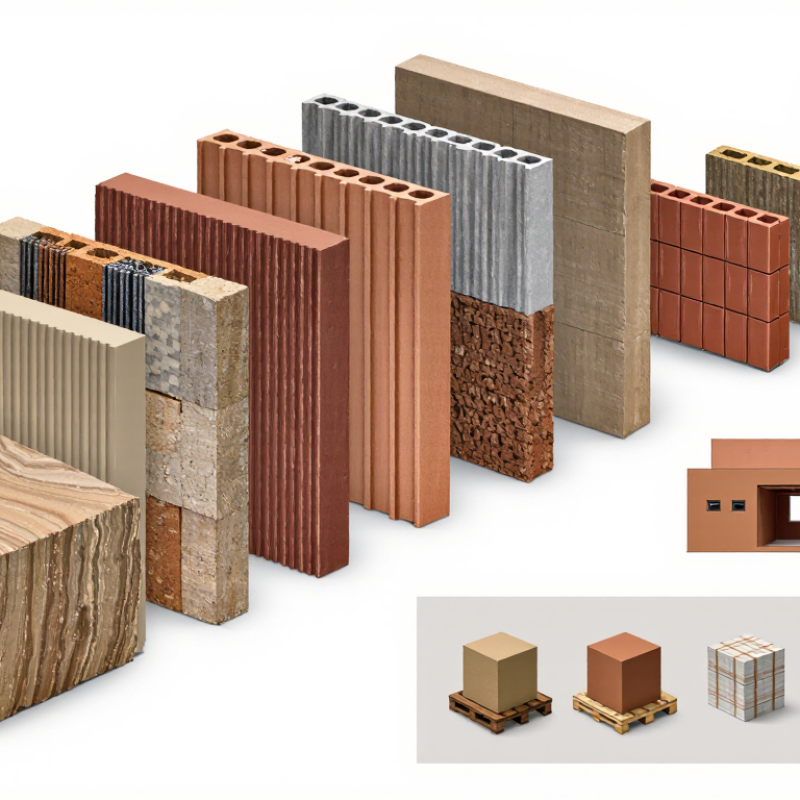
Rammed Earth Panels: Composition, Density, and Structural Classification
Rammed earth panels combine selected soil, sand, gravel, and a controlled binder. Some systems also use mineral pigments for layered, stone-like surfaces. The mix is compacted in molds, then cured under monitored conditions. Composition strongly affects color, moisture response, and edge stability. A panel with excess clay may shrink or crack. Too much sand can weaken cohesion.
Material Performance
Density commonly falls between 1,800 and 2,200 kilograms per cubic meter, but published values need verification. Higher density often improves impact resistance and acoustic performance. It also increases lifting demands and wall loads. Global buyers should request test reports, moisture data, fire performance, and dimensional tolerances. Small sample panels reveal more than glossy photographs. Check the cut edges. They often expose voids, weak layers, or inconsistent compaction.
Structural Classification
Structural classification deserves careful attention. Many products are non-load-bearing Rammed Earth Cladding, fixed to a separate structural frame. Others function as infill panels, while engineered load-bearing systems require project-specific calculations. Local wind, seismic, thermal, and connection requirements can change the specification. A reliable supplier should explain reinforcement, anchors, curing time, and installation limits in clear language. The field is less tidy than brochures suggest. Density alone does not prove structural capacity. I would also question unusually broad performance claims, especially when testing methods are missing. A practical procurement review should compare samples, certificates, tolerances, replacement procedures, and transport protection before approving a panel system.
Global Supplier Landscape: Regions, Capacity, and Export Coverage
The global rammed earth panel market remains fragmented. Major supplier clusters appear in Australia, New Zealand, Western North America, Europe, India, Southern Africa, and parts of Latin America. These regions combine local soil expertise, low-carbon construction demand, and established prefabrication skills. However, no reliable public database measures worldwide panel capacity. That gap matters.
Most producers operate through project-based manufacturing rather than continuous mass production. Annual output may range from small workshop batches to factory-scale modular lines. Buyers should request monthly capacity, mold dimensions, curing times, and recent export records. A practical supplier may ship dry panels, then coordinate local assembly. Others prefer regional production because freight costs rise quickly with panel weight and volume.
Trade coverage is also difficult to compare. UN Comtrade classifications rarely isolate Rammed Earth Material, so export figures can include unrelated prefabricated building components. The World Bank’s 2023 Logistics Performance Index offers useful country-level signals for customs, transport, and delivery reliability. The IEA and UNEP 2023 buildings report links construction and building operations to 37% of global energy-related and process emissions, strengthening demand for lower-impact materials. Yet embodied-carbon claims need product-level testing.
Regional codes can slow projects. Soil composition changes too. A supplier experienced in dry inland construction may need new testing for humid coastal sites. This is an uncomfortable but important limitation. Global buyers should compare verified compressive strength, moisture protection, packaging methods, installation training, and delivered cost—not export distance alone.
Top Rammed Earth Panel Suppliers for Global Buyers
Global Supplier Landscape: Regions, Capacity, and Export Coverage
Europe and North America show the strongest combination of estimated annual panel capacity and international reach.
Oceania has a smaller production base but high export orientation, while Asia-Pacific and the Middle East represent
developing supplier clusters with growing cross-border coverage. Values are directional 2024 market estimates based on
publicly available supplier directories, project disclosures, manufacturing profiles, and regional construction-market data;
rammed earth panels are not reported under a standardized global customs classification.
Performance Benchmarks: ASTM E2392 and Thermal-Mass Metrics
For global buyers, ASTM E2392/E2392M offers a practical framework for evaluating Rammed Earth As A Building Material. However, it is a guide, not a single pass-or-fail performance standard. Suppliers should document soil grading, moisture content, compaction energy, wall thickness, and curing conditions. Without these details, two panels can look identical but perform differently.
Thermal mass deserves measured data, not marketing language.
The 2023 ASHRAE Handbook—Fundamentals places dense earth-based materials within a broad range of approximately 1.4–2.2 MJ/m³·K for volumetric heat capacity, depending on density and moisture. Typical rammed earth densities may range from 1,800 to 2,200 kg/m³. A 300-millimeter wall can therefore absorb meaningful daytime heat, then release it after sunset. The exact delay remains project-specific.
The U.S. Department of Energy’s Building America research emphasizes matching thermal mass with insulation, airtightness, shading, and local climate. A heavy wall alone cannot correct poor solar control. Buyers should request laboratory conductivity tests under declared moisture conditions, plus heat-flow or dynamic simulation results. ASTM E2392 also encourages attention to drainage and detailing around openings. That practical point is often missed.
A cautious comparison is better. Supplier data may be incomplete, and thermal-lag claims can sound overly precise. Insist on test methods, sample dimensions, and seasonal assumptions before comparing international quotations.
Durability Testing: Moisture, Freeze–Thaw, Seismic, and Fire Data
For global buyers, rammed earth panel durability begins with transparent testing, not attractive photographs.
Moisture testing should record absorption, drying time, edge swelling, and surface erosion. Ask for panel thickness, curing conditions, specimen age, and test humidity. Small details matter. A panel can look sound after spraying, yet show soft corners after repeated wetting.
Freeze–thaw data needs careful interpretation.
Request the cycle count, temperature range, saturation level, and measured mass loss. Inspectors should photograph cracks before and after testing. Seismic evaluation should include cyclic loading, connection details, and failure observations. The panel alone is not the whole wall. Anchors, joints, openings, and foundation movement can change performance dramatically. In practice, connection failure may appear before panel failure. That detail is easy to miss.
Fire reports should identify the tested assembly, not only the earth material.
Review fire duration, exposed face, temperature readings, smoke behavior, and structural stability. Independent laboratories, traceable samples, and signed reports strengthen supplier credibility. However, results from one climate or panel size may not represent another project. Laboratory work has limits. Buyers should compare test methods with local design requirements and request recent production samples. I would also question unusually perfect data, because real panels can contain color variation, minor voids, or uneven edges. That imperfection deserves investigation, not concealment.
Carbon Accounting: ISO 14067, EN 15804, and EPD Comparisons
For global buyers, carbon claims about rammed earth panels need more than a low-impact label. ISO 14067 measures a product’s carbon footprint across defined life-cycle stages. It can include raw materials, manufacturing, transport, installation, use, and disposal. Buyers should check the boundary before comparing figures. A factory report covering only production cannot match a full life-cycle assessment.
EN 15804 provides rules for construction-product environmental declarations. An EPD uses these rules to present verified data, such as global warming potential per square metre or cubic metre. The declared unit matters. One supplier may report a 1 m² panel, while another reports 1 m³ of material. The comparison then becomes misleading. Not always obvious.
During supplier reviews, request the EPD, product category rules, verification date, and transport assumptions. Check whether renewable electricity, recycled soil content, packaging, and delivery distances are included. A panel manufactured near a project may outperform a lighter panel shipped across oceans. Moisture protection and replacement assumptions also deserve attention.
The numbers are not perfectly clean. Some declarations use regional energy data, while buyers apply them to another grid. That limitation should be recorded, not hidden. A reliable purchasing file links each carbon figure to its source, unit, life-cycle module, and verification status. It also preserves unanswered questions. Reflection improves the comparison.
Supplier Verification: ISO 9001, Factory Audits, and Test Reports
Global buyers should treat ISO 9001 as a starting point, not final proof. The ISO Survey 2022 recorded 1,265,216 ISO 9001 certificates worldwide. However, the certificate only confirms a quality management system. It does not guarantee consistent rammed earth panel strength, moisture resistance, or installation performance. Check the certificate scope, issuing body, expiry date, and audited factory address. The supplier’s legal entity should match every document.
A factory audit should inspect soil storage, stabilizer control, pressing equipment, curing areas, and batch labeling. Ask for recent test reports, not sample files prepared years ago. Reports should identify the tested product, production batch, laboratory, method, and testing date. Useful evidence includes compressive strength, density, water absorption, thermal conductivity, and fire classification. Methods should match project requirements, such as ASTM or EN procedures. The World Green Building Council reports that buildings account for approximately 39% of global energy-related carbon emissions, so thermal data deserves careful review. Yet one weakness remains: laboratory results may not represent poor site handling.
Tips: Request three traceable reports from different batches. Call the laboratory independently. Compare declared values with project specifications. Ask for corrective-action records after failed tests. A clean audit is valuable, but it is still a snapshot, not a lifetime guarantee.
Procurement Criteria: MOQ, Lead Time, Incoterms, Warranty, and Cost
Top Rammed Earth Panel Suppliers for Global Buyers
When sourcing rammed earth panels, confirm the minimum order quantity before requesting a formal quotation. Some suppliers accept small sample orders, while production may require several pallets. Ask whether the MOQ applies per color, thickness, or finish. A realistic lead time should include tooling, curing, inspection, and port handling. In my experience, a written production schedule is more useful than a broad promise such as “fast delivery.” Request dated milestones and photographs from a previous shipment.
Incoterms can change the actual project cost. Compare EXW, FOB, CIF, and DDP offers carefully, including insurance, customs clearance, and inland transport. Warranty terms deserve equal attention. Check coverage for cracking, delamination, color variation, and installation damage. Some warranties exclude moisture exposure or incorrect storage. That detail matters. Calculate landed cost per square meter, not only the factory price. Include packaging, duties, testing, replacement panels, and local labor. For projects using Brick Panel Cladding alongside rammed earth, confirm matching textures and edge dimensions before ordering.
Tips: Request two physical samples and record their weight, thickness, surface texture, and color under daylight. Ask for test reports covering strength, moisture behavior, and fire performance where applicable. Confirm pallet dimensions before booking freight. A supplier may quote an attractive price, yet oversized crates can reduce container efficiency. I would also reserve extra panels for site cutting. This allowance is easy to overlook. Suppliers should explain corrective procedures when panels arrive damaged or differ from the approved sample.
Modern Texture, Timeless Appeal: Medium Grey Splicing Travertine Flexible Stone Wall Panels
Modern Texture, Timeless Appeal: Medium Grey Splicing Travertine Flexible Stone Wall Panels bring natural depth to contemporary interiors without overwhelming the surrounding design. Made from high-purity natural travertine mineral sand, the veneer features an irregular long-and-short block arrangement, subtle porous grain, and a restrained medium-grey tone. Its ultra-thin, lightweight, bendable eco-composite structure simplifies installation on feature walls, curved surfaces, partitions, and renovation substrates. With an A2 fire-resistance rating, moisture resistance, stain resistance, and long-term light stability, it supports practical performance in studies, living rooms, tea rooms, and neutral-toned commercial spaces.
The material also reflects broader design priorities. The Global Wellness Institute valued the global wellness real estate market at approximately $438 billion in 2023, highlighting growing demand for calming, tactile environments in residential and hospitality settings. Meanwhile, the United Nations Environment Programme’s Global Status Report for Buildings and Construction continues to identify buildings as a major source of global energy use and carbon emissions, making lightweight renovation solutions increasingly relevant. The natural mineral texture offers visual warmth while the modular splicing pattern creates rhythm across large surfaces, delivering a modern light-luxury aesthetic with efficient handling and adaptable application.
FAQS
They usually contain selected soil, sand, gravel, and a controlled binder. Mineral pigments may create layered, stone-like surfaces. The mixture is compacted in molds and cured under monitored conditions.
Density commonly ranges from 1,800 to 2,200 kilograms per cubic meter. Higher density may improve impact resistance and sound control. It also increases lifting demands and wall loads.
No. Density alone does not prove structural capacity. Ask for verified strength reports, connection details, and project-specific calculations. Brochures can sound more certain than testing allows.
Many panels are non-load-bearing and attach to a separate structural frame. Others serve as infill. Engineered load-bearing systems need calculations for wind, seismic, thermal, and connection conditions.
Request at least two samples. Record their weight, thickness, texture, and daylight color. Inspect the cut edges closely. Voids and weak layers may appear there.
Excess clay may cause shrinkage or cracking. Too much sand can reduce cohesion. Composition also affects color, moisture response, and edge stability. Small formula changes matter.
Request strength tests, moisture data, fire performance, dimensional tolerances, and curing information. Confirm reinforcement, anchors, installation limits, and packaging methods. Missing test methods deserve careful questioning.
Include tooling, curing, inspection, port handling, customs, insurance, and inland transport. Compare delivered cost per square meter, not factory price alone. Oversized crates can waste container space.
Ask whether the minimum applies by color, thickness, or finish. Some suppliers accept sample orders but require several pallets for production. This detail is easy to miss.
Confirm replacement procedures before ordering. Ask how cracking, color variation, delamination, and transport damage are treated. Reserve extra panels for site cutting. I would not assume every approved sample matches production.
Conclusion
This guide explains how rammed earth panel systems are composed, classified, and evaluated for structural use. It examines soil and binder content, density, load-bearing potential, thermal mass, and performance benchmarks associated with ASTM E2392. Buyers will also find a practical overview of global supplier regions, production capacity, export coverage, and the testing commonly used to assess moisture resistance, freeze–thaw durability, seismic performance, and fire behavior.
The article also introduces a framework for comparing environmental performance through ISO 14067, EN 15804, and Environmental Product Declarations. It outlines how to verify suppliers through ISO 9001 certification, factory audits, production records, and independent test reports. Finally, it highlights key procurement considerations, including minimum order quantities, lead times, Incoterms, warranty terms, installation support, lifecycle costs, and delivered pricing, helping international buyers select a reliable rammed earth panel solution for their project requirements.
 +86 18942445383

 Contact Email